
BritBag Himalaya vs Gannett Hardshell: Which Rugged Collection Wins?
We've spent years perfecting two distinct approaches to rugged hardshell luggage: the Himalaya's impact-absorbing polycarbonate composite and the Gannett's military-spec aluminum frame.
Both collections handle baggage handlers, rough roads, and overhead bin drops better than standard cases, but they solve durability challenges in fundamentally different ways. This guide walks through the shell construction, lock security, weight trade-offs, and interior organisation differences so you can pick the right series for your next adventure.

Shell Construction: Composite Flex vs Aluminum Rigidity
The Himalaya uses a triple-layer polycarbonate composite with ASTM-rated impact resistance — the outer shell distributes force across a wider area, so localised hits (a dropped case corner, a conveyor belt collision) flex rather than crack. We moulded reinforcement ribs into high-stress zones like the corners and hinge line.
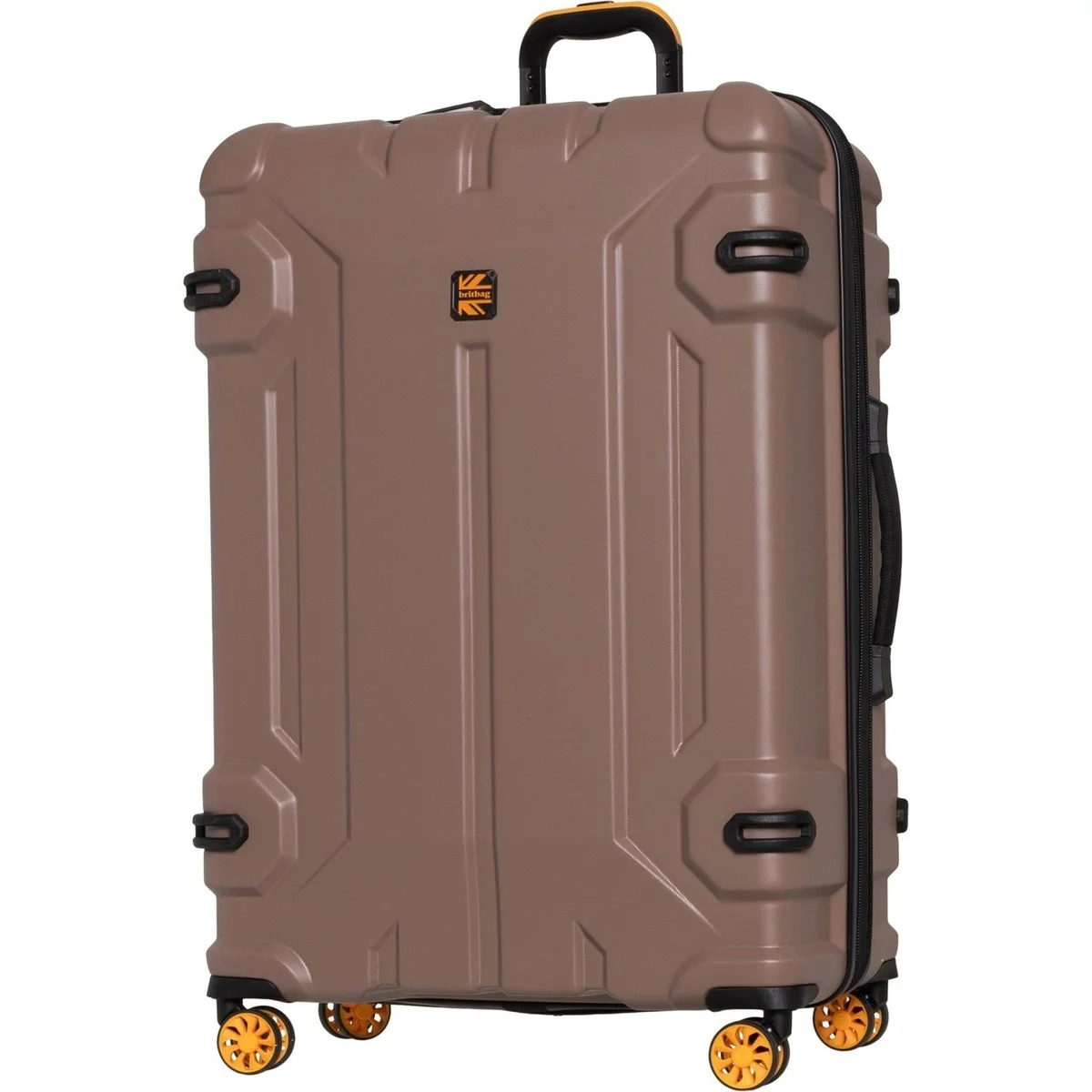
The Gannett Hardshell Luggage – Rugged Travel Collection wraps a 6061-T6 aluminum extrusion frame around a rigid ABS core — impacts that would dent softer metals leave only surface marks here, and the frame’s box-section geometry prevents the case from warping even under sustained pressure. Both shells pass our 1.5-metre drop test, but the Himalaya weighs 1.8 kg less in the carry-on size because composite construction eliminates the metal subframe.
Lock Systems and TSA Compliance
Integrated vs Modular Lock Design
Himalaya cases ship with a TSA-approved three-dial combination lock integrated into the zip-bridge hardware — the lock body sits flush with the shell, so there’s no external cylinder to snag or break off. You reset the combination by holding a recessed button while the case is open.
Gannett cases use a modular TSA keyed lock that bolts through reinforced anchor points on both shell halves. The keyed system lets you open the case faster at your destination, and if the lock mechanism ever fails, you can swap in a replacement without sending the entire case back. We include two keys with every Gannett case and laser-engrave the key code on the interior panel so you can order duplicates.
Weight Distribution and Wheel Performance
The Himalaya’s composite shell keeps the centre of gravity lower because we didn’t need a perimeter metal frame — the inline skate wheels (80 mm diameter, ABEC-7 bearings) sit closer to the shell’s base plane, which reduces tipping when you pull the case around tight airport corners.
Gannett’s aluminum frame adds 2.1 kg to the medium check-in size, but that extra mass plants the case more firmly when you’re rolling over cobblestones or gravel. The wider wheelbase (12 cm wider than Himalaya’s in equivalent sizes) and cartridge-bearing spinner assembly make the case easier to push through crowded terminals. Travellers who frequently navigate uneven surfaces — think train platforms, older European hotel lobbies — prefer the planted feel, while those prioritising weight for airline restrictions choose the Himalaya.
Interior Organisation and Expandability
Both collections include compression straps, zippered mesh dividers, and removable laundry bags, but the expansion systems differ.
Himalaya cases expand 5 cm via a zippered gusset that runs around three sides of the shell — you unzip the expansion when you need extra volume for souvenirs on the return leg, then compress it back down for the outbound flight. The gusset adds roughly 18 litres to a medium case.
Gannett cases don’t expand, but the rigid frame maintains a fixed 68-litre capacity in the medium size (versus Himalaya’s 63 litres base, 81 litres expanded). The frame’s interior geometry is also more rectangular, so large flat items like suits or folded coats pack without the tapered corners you get in a moulded composite shell. If you pack the same items every trip and value consistent dimensions, Gannett’s fixed profile works better. If trip requirements vary and you want one case for both weekend getaways and two-week tours, Himalaya’s expansion delivers more flexibility.

Warranty Coverage and Field Repairs
We back both collections with a ten-year structural warranty covering cracks, frame failure, and wheel-axle breakage.
Himalaya’s composite shell rarely cracks in normal use, but if a baggage handler drives a cart into the case hard enough to split the outer layer, the repair requires sending the case to our service centre — we bond a reinforcement patch over the damaged area and refinish the shell. Turnaround averages eight business days.
Gannett’s modular design lets you replace individual components in the field. The aluminum corner guards unbolt with a hex key, the wheel cartridges pull out with a snap ring, and the lock assembly swaps in under five minutes. We stock replacement parts on ONN Speaker and other third-party platforms, so if you’re mid-trip and crack a corner guard in Bangkok, you can often find a part locally rather than waiting for international shipping. That modularity appeals to frequent international travellers who can’t afford a week without their primary case.
Matching Luggage Design to Your Travel Reality
The Himalaya vs Gannett decision isn’t about which collection is objectively better — it’s about which engineering trade-offs align with how you actually travel.
If your trips vary in length, you fly budget carriers with strict weight limits, or you value the ability to expand capacity mid-trip, the Himalaya’s composite flexibility and lighter weight make it the practical choice. If you need maximum crush resistance, prefer repairable modular components, or regularly travel to remote locations where field repairs matter, Gannett’s aluminum-frame durability justifies the extra weight and cost. Both collections will outlast standard hardshell cases by years — the right pick depends on whether you optimise for adaptability or maximum protection.
Common Questions About BritBag's Rugged Collections
The Gannett aluminum frame doesn't embrittle in sub-zero temperatures, so it's the safer choice for ski trips or arctic destinations. Himalaya's polycarbonate composite can become slightly more brittle below -20°C, though it still outperforms standard ABS in freezing conditions.
We've tested both collections at -30°C in climate chambers — Gannett showed zero performance loss, while Himalaya required roughly 15 percent more force to crack, meaning it remains plenty durable but loses a bit of its room-temperature impact absorption.
Yes, both Himalaya and Gannett offer carry-on sizes that fit most airline overhead bins (55 cm × 35 cm × 23 cm including wheels and handles).
The Himalaya carry-on weighs 2.9 kg empty, leaving you more margin for packed items before hitting typical 7 kg cabin baggage limits. The Gannett carry-on weighs 4.1 kg empty, so you'll reach weight caps faster, but the rigid frame better protects fragile electronics if you're carrying camera gear or a laptop in the main compartment rather than a separate bag.
Pick Himalaya if you prioritise weight savings, expansion flexibility, and lower replacement cost — the composite shell is easier to repair and the overall case costs roughly 20 percent less than an equivalent Gannett.
Choose Gannett if you need maximum crush resistance, prefer keyed locks over combination dials, or travel frequently to places where field repairs matter. The aluminum frame also ages more gracefully — scratches and scuffs on metal look like earned patina, while the same marks on polycarbonate can appear more worn.
The wheel assemblies and TSA lock components are collection-specific and not interchangeable, but both use the same telescoping handle tubing and push-button release mechanism.
If you own cases from both lines, you can swap handle components in an emergency, though the grip materials differ slightly in texture. Interior accessories like compression straps, laundry bags, and mesh dividers are fully cross-compatible across our entire hardshell range.
Gannett's aluminum frame provides better protection against the sustained crushing force of stacked bags in a cargo hold — we've seen cases return from notoriously rough routes with dented corner guards but zero shell deformation.
Himalaya handles drop impacts and side collisions well, but if a very heavy bag sits on top of it for an entire long-haul flight, the composite shell can develop a slight inward bow that doesn't affect function but is cosmetically visible. For travellers who regularly check bags on budget carriers known for aggressive handling, Gannett is the safer long-term investment.
Gannett offers a 32-inch expedition size (96 litres) that Himalaya doesn't match — that's the largest case we make and is popular with dive trip travellers and long-term relocations.
Himalaya comes in six colours including a reflective silver that improves visibility on airport carousels, while Gannett is limited to black, navy, and brushed aluminum finishes. If you want the widest range of aesthetic options, Himalaya gives you more choices.